One thing you notice when you spend any time walking around Barcelona is just how many balconies there are, and how small some of them are.
A lot are barely wide enough for a chair. Some don’t even seem to manage that. Yet people find a use for them. Washing gets hung out, bikes get squeezed into corners, plants appear on every available ledge and there is nearly always somebody who has managed to fit a small table into a space where a small table really shouldn’t fit.
They are not terraces in the way we tend to think of terraces. On many of the older apartment buildings they are simply a narrow strip between the flat and the street. But that strip can make quite a difference to how the flat works.
Part of the flat, part of the street
In winter the balcony can feel fairly separate from the rest of the home. The doors are shut and you might only go outside to hang something up or water a plant.
In summer it is different. Once the doors are open the balcony effectively becomes part of the room behind it.
That also means the street becomes part of the room.
Depending on where you live, you get scooters, people talking below, deliveries, bins being collected and the general background noise of Barcelona. You also get cooking smells from neighbouring flats and, quite often, cigarette smoke from somebody else’s balcony.
There isn’t much privacy either. In the narrower streets you can see straight across into the building opposite, and they can see straight back.
Oddly, that doesn’t necessarily stop people using them. Plenty of balconies have one chair that quite clearly gets used every day.
They are useful in the heat
The more interesting part, at least from the point of view of how these old buildings work, is what happens when the weather gets hot.
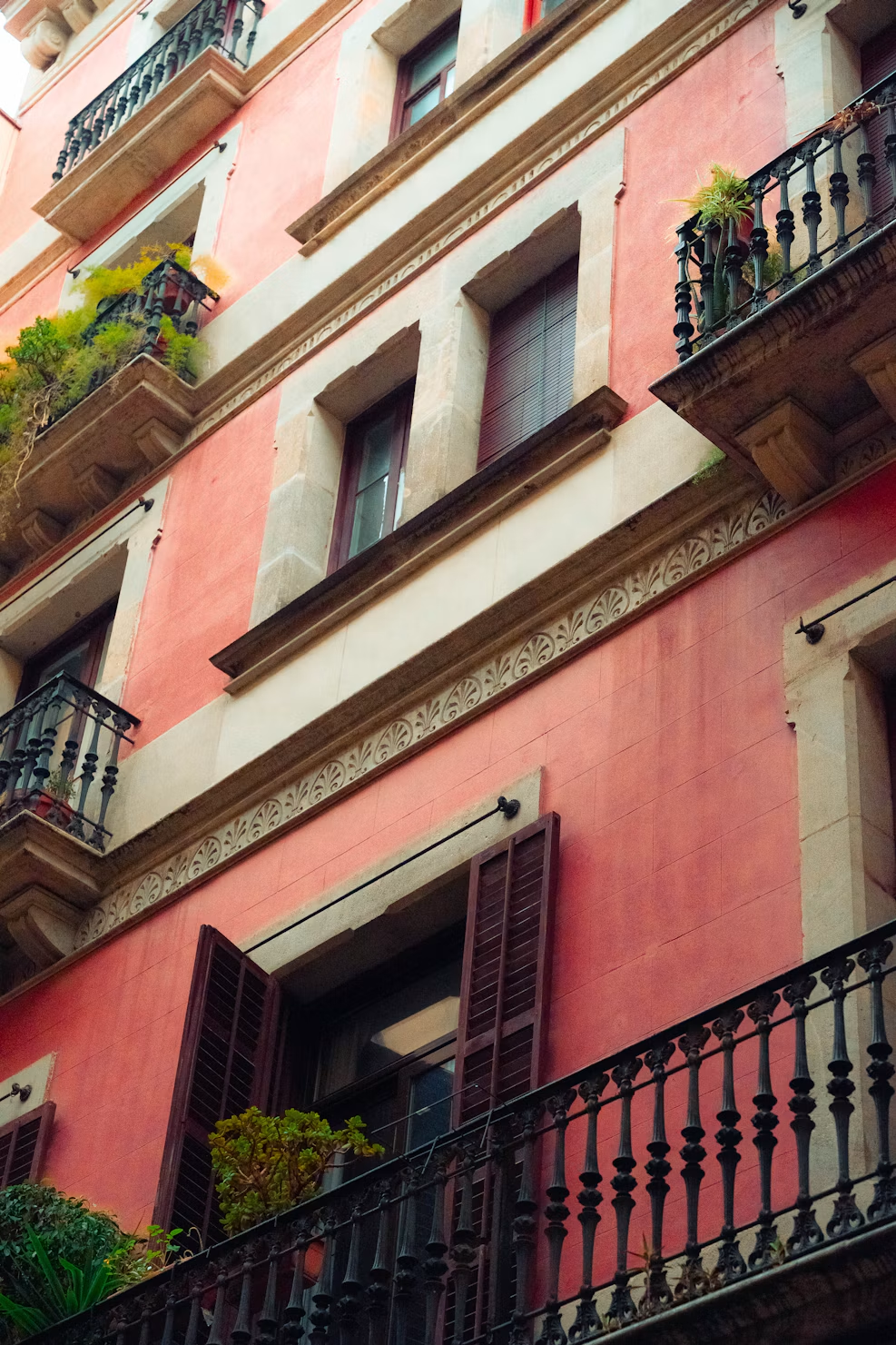
A balcony gives some protection to the opening behind it, particularly when there is another balcony above. Add shutters or an awning and you have a fairly simple way of keeping direct sunlight away from the glass.
That matters in Barcelona.
Once strong afternoon sun has been coming through a window for a few hours, the room behind it can take a long time to cool down. The floor, furniture and walls have all warmed up and continue releasing that heat later in the evening.
It’s one of the reasons the top floor never seems to cool down at night.
The old-fashioned answer is visible all over the city: stop the sun before it reaches the window.
Shutters, blinds and awnings are not exactly exciting pieces of technology, but they work. There are modern versions of the same idea too. Automated systems such as Lutron blinds can manage daylight and shading automatically, although the basic principle hasn’t changed very much. If you can keep strong sun out of the room in the first place, you have less heat to get rid of later.
During the week the heatwave arrived and the fans gave up, this became particularly obvious. Closing things after the room was already hot didn’t achieve much. Keeping the sun out earlier in the day did.
The direction the balcony faces makes a big difference as well. Walk down a Barcelona street in the afternoon and you can often see it quite clearly. One side has open doors and people outside. On the sunny side, the shutters are down.
Then there is the washing
This is probably a more important use of Barcelona balconies than anything architects have to say about them.
Flats are often short of space and drying washing outside is considerably easier than having an airer occupying half a bedroom.
So balconies fill up with sheets, towels and clothes.
There is always a slight gamble involved if the weather looks uncertain. Barcelona is good for drying washing most of the time, but an unexpected shower produces the familiar sight of people suddenly appearing on balconies and pulling everything back inside.
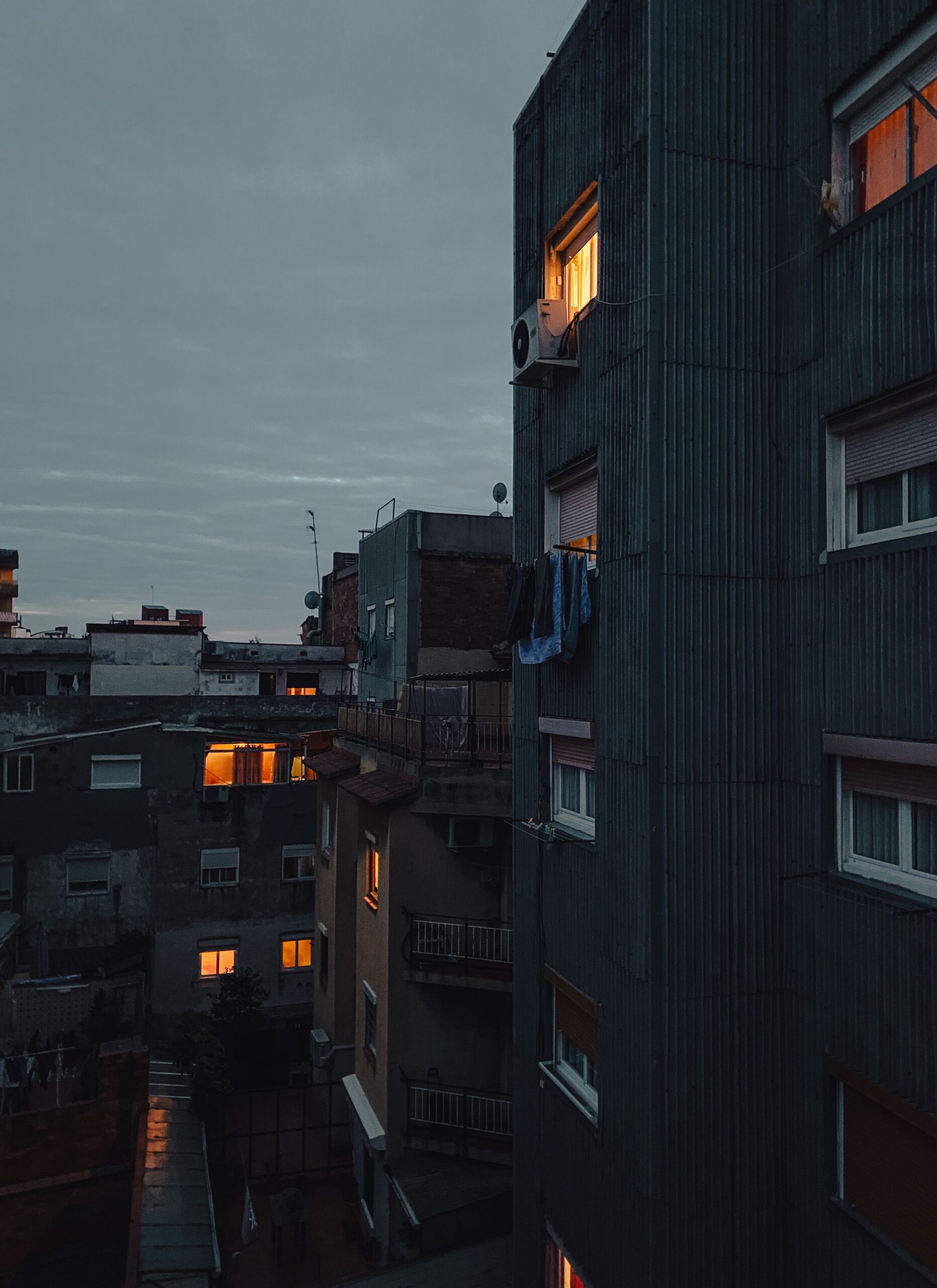
In some buildings the washing is hidden away at the back, particularly where flats open onto an internal courtyard. Elsewhere it is simply part of the street.
Nobody seems particularly bothered by it.
Plants everywhere
Plants are the other obvious feature.
Some balconies have a couple of pots. Others look as though the owner has been attempting to establish a botanical garden three floors above the pavement.
They make a surprising difference to the appearance of a street.
Barcelona’s older buildings can be fairly hard-looking at ground level: stone, render, metal shutters and paving. A row of balconies full of plants changes the façade completely.
They also show how different conditions can be even within a very small space. A plant against the wall may be shaded for much of the day while another 50cm away near the railing gets hours of direct sun.
You soon find out which one you have put in the wrong place.
Or they become storage
The less picturesque version is that balconies are extremely convenient places to put things you don’t know what to do with.
A bicycle is an obvious candidate. Then there are buckets, spare chairs, boxes, empty plant pots, cleaning equipment and things that are supposedly only going to stay outside for a few days.
After a while the balcony can cease to be somewhere you go and become somewhere you store things.
This makes sense in a small flat. What is interesting is how much you notice the loss of the balcony once it is full.
Even if you rarely sit outside, being able to open the doors and step out for a minute makes the flat feel less enclosed.
You don’t actually need a view
The balcony doesn’t need to overlook the Sagrada Família or the Mediterranean either.
Most don’t.
A perfectly ordinary Barcelona balcony may look at another apartment building across the road.
But it still tells you what is going on outside.
You can check whether it is raining, see whether people are wearing jackets, work out why there is a queue downstairs or discover that the noise you’ve been listening to for ten minutes is somebody trying to manoeuvre a van into an impossible parking space.
In the evening they become more noticeable.
Lights come on inside the flats, doors are left open and people step outside for a few minutes. From the street you see little bits of domestic life stacked on top of each other.
That is probably what makes Barcelona’s balconies interesting. Most of them aren’t particularly grand and many are hardly big enough to use properly.
But people use them anyway.
For washing, plants, bikes, shade, storage, sitting outside or just checking what the weather is doing.
A couple of square metres doesn’t sound like much when you are looking at a floor plan.
In a Barcelona flat, it can be quite a lot.