The top floor is usually the last part of a building to cool down.
By late evening the street temperature may have dropped. Balconies feel more comfortable. Windows are opened. Fans are moved into bedrooms and pointed hopefully towards the bed.
Upstairs, very little changes.
The problem started hours earlier.
All afternoon the roof was exposed to the sun. Tiles, concrete and waterproofing absorbed heat while the rooms underneath slowly warmed. Once the sun disappeared the roof did not suddenly become cold. It began releasing the heat it had stored.
Much of it went straight into the top-floor ceiling.
This is why opening the windows at sunset can feel strangely ineffective. Cooler air may enter the room but the surfaces around it are still warm. The ceiling continues radiating heat downwards. Internal walls and furniture have been warming all day too.
The room is being ventilated and heated at the same time.
Lower floors are protected by the apartments above them. The top floor has no such buffer. It sits directly beneath the hottest external surface in the building.
The difference becomes more noticeable after several hot days.
A single warm afternoon may be manageable. A run of them allows heat to build within the structure. The building does not lose everything it gained overnight before the next day begins. Each morning starts slightly warmer than the last.
By the third or fourth night the top floor can feel detached from the weather outside. The pavement has cooled. People are sitting comfortably at café tables. Inside, the ceiling still feels warm and the fan is mostly moving hot air from one side of the room to the other.
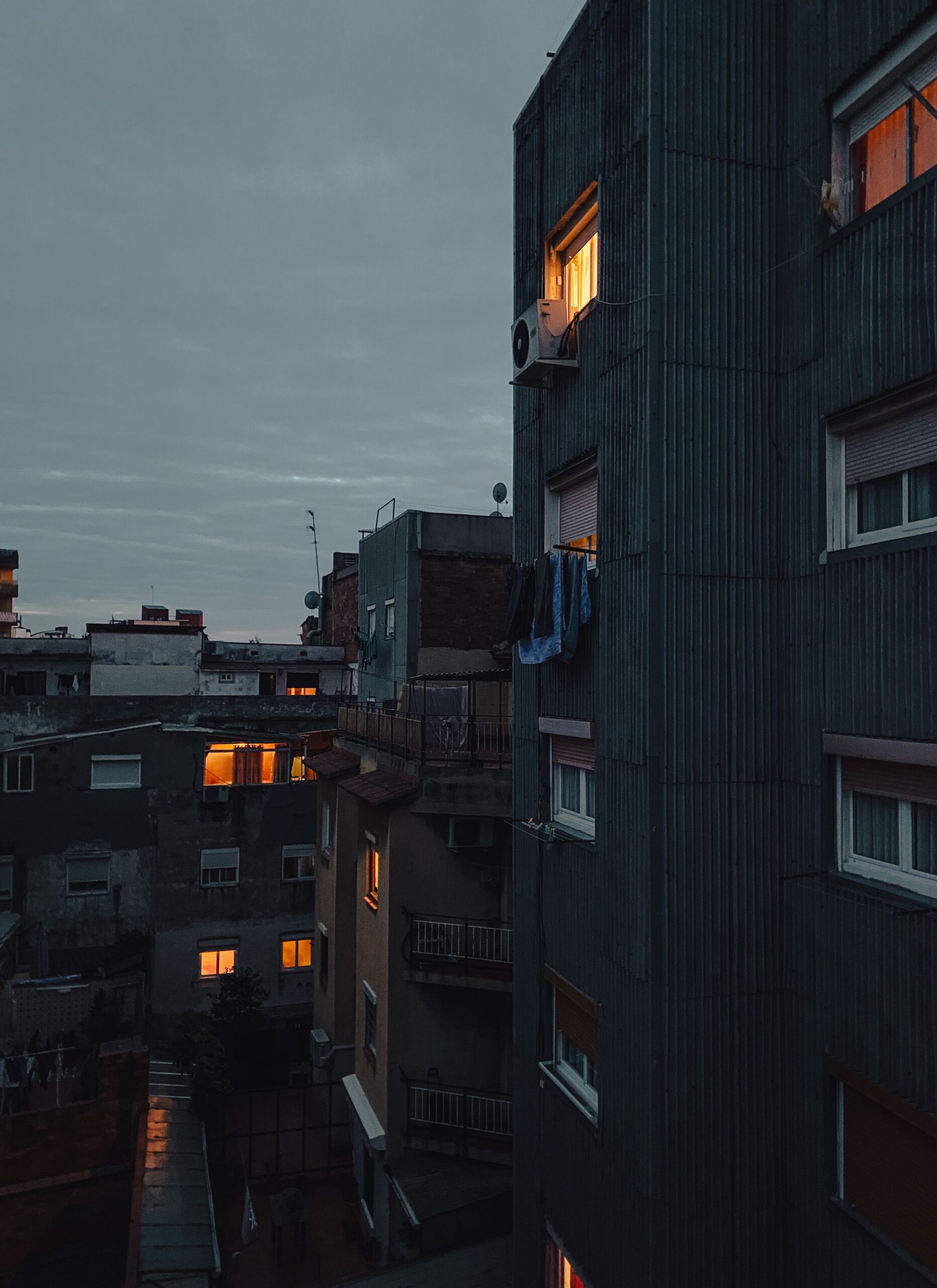
Barcelona’s older apartment blocks were not built around sealed rooms and constant air conditioning. Many rely on shutters, internal courtyards and air moving through open windows.
Those features can work well when the nights are cool enough.
They work less well when the outside air remains warm and humid. A window facing a narrow courtyard may not create much airflow. Opening another window helps only if there is a route through the flat. Without that route the warm air stays where it is.
Top-floor extensions can make things worse.
Some were added long after the original building was completed. Others have lightweight roofs, enclosed terraces or rooms created from spaces that were never intended to be occupied throughout the summer. Insulation varies enormously.
A roof terrace above the flat may appear to provide some separation from the sun. In practice its paving can become another large heated surface. It absorbs energy during the day and releases it slowly after dark.
White coatings, insulation and external shading can reduce the amount of heat entering through a roof. Yet these are rarely decisions one resident can make alone. The roof belongs to the building. Work requires agreement, money and usually a meeting that begins with the leak above somebody’s bathroom before eventually reaching summer temperatures.
So the immediate response happens inside the flat.
Shutters stay closed during the brightest hours. Internal doors are opened at night. Fans are placed near windows to encourage air to move through rather than simply around the room. Cooking is delayed or avoided. Anything that produces more heat begins to seem unreasonable.
Air conditioning deals with the room rather than the roof. It can make the temperature bearable but once it is switched off the stored heat remains. The ceiling, walls and floor begin warming the air again.
That is the frustrating part.
By two in the morning the open window may finally be bringing in cooler air. The fan sounds busy. Somewhere lower down in the building a door closes and someone runs water through the courtyard pipes.
On the top floor the ceiling is still giving back the afternoon.